Office Clearance in Seven Sisters

Our office clearance in Seven Sisters is arranged for workplaces that need desks, chairs, filing, fixtures and general contents removed in a clear, organised way. We handle the practical steps involved in clearing business spaces so the area can be handed back, reconfigured or prepared for the next stage of use. The service is suitable when you want a straightforward removal plan that respects access, building rules and the variety of items often found in offices.
We clear a broad mix of office contents, from everyday furniture to mixed stored items that have built up over time. That can include workstations, storage units, meeting room furniture, reception pieces, boxed materials and redundant equipment. If you are comparing options, think first about what needs to go, what must stay and whether anything needs separating for reuse, recycling or disposal. That simple sorting step helps the clearance run in a more orderly way.
In practical terms, a good office clearance depends on layout, lift access, floor protection, parking arrangements and the amount of dismantling required. We can work with phased removals where parts of the premises remain in use, or with larger clear-outs where the space is being fully emptied. Our aim is to make the process manageable for the person arranging it, while keeping the work focused on the items and rooms that actually need attention.
What our office clearance service covers
Office clearance is more than simply carrying furniture out of a room. It often involves planning the order of removal, navigating corridors and shared entrances, and dealing with items that vary in weight, condition and disposal route. The service can be tailored to open-plan offices, private suites, back rooms, storage areas and reception spaces. Where desks or shelving need to come apart first, that step is handled as part of the overall clearance rather than left for the customer to manage separately.
Mixed office contents are common, so the work is usually best approached in categories. Items in usable condition may be separated from damaged or obsolete pieces, while paperwork, electronics and general furnishings are dealt with in appropriate ways. A clear inventory is not always necessary, but it is useful to know which spaces are being cleared and whether the job includes basements, upper floors or archive rooms. If you are ready to move on, request a quotation when it suits you.
Typical office clearance decisions include:
- which furniture should be dismantled before removal
- whether archived or boxed items are staying on site
- how to handle mixed waste alongside reusable items
- what access points are available for moving larger pieces
- which rooms should be cleared first in a phased job
Office furniture removal and layout changes
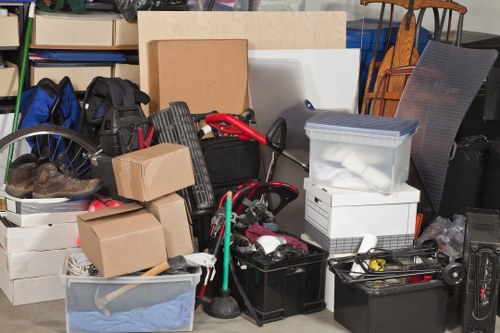
Many office clearances in Seven Sisters are really about changing how a workplace functions. That may mean removing surplus desks after a team restructure, clearing old storage units from a corridor or taking away reception furniture that no longer fits the current layout. Our furniture removal work is useful when you want the room emptied without having to manage heavy lifting, dismantling or transport yourself. The result is a cleaner, more workable space ready for reuse or further works.
Furniture clearance is often easiest when each type of item is considered separately. Desks, chairs, tables, cabinets and shelving do not all need the same handling, especially if some pieces are modular or fixed together. Where items are reusable, the condition may matter; where they are no longer suitable, the route for disposal matters instead. If you are weighing up the work, a short list of item types and room names can make the discussion more precise. That helps avoid surprises later on.
We also deal with furniture that has been in place for a long time and is awkward to remove. This can include bulky meeting tables, office cupboards, filing furniture and corner units that were fitted around a previous layout. In such cases, careful removal matters as much as speed. The aim is to clear the right pieces cleanly while keeping the rest of the premises usable until the job is complete.
Business waste and mixed contents
Not every office clearance is only about furniture. Businesses often need mixed contents removed at the same time, including packaging, broken equipment, storage items and general waste that has accumulated around the workplace. Where this happens, the clearance needs to be organised so different categories are handled sensibly. A mixed load is easier to manage when the items are grouped by room, by use or by disposal type before work starts.
Our business waste removal approach is suited to offices that are being reduced, reconfigured or prepared for closure. That may involve removing loose contents from back offices, cupboards, stock areas or staff rooms alongside the main office furniture. If equipment includes older fittings or non-standard pieces, those can be discussed as part of the overall clearance plan. The most practical outcome is usually a space that is emptied in a steady, workable sequence rather than all at once without structure.
Price can be influenced by the volume of material, the time needed for dismantling, access conditions and the variety of items involved. Mixed contents often take longer to assess than a simple furniture-only job because the final disposal route may differ from one item to the next. For that reason, it is useful to be clear about what is inside the rooms, whether there are stairs or lifts, and whether the clearance must happen outside normal working hours. Once those details are known, the quotation can be aligned to the actual scope.
Preparing an office for clearance

Preparation is simplest when the workplace has already been divided into what stays and what goes. A brief room-by-room note is often enough for a quotation conversation, especially if the premises contain a mix of furniture, storage and loose items. If possible, it is useful to identify anything that must remain on site, any delicate fixtures around the clearance area and any access points that might affect moving larger items. That keeps the work focused and reduces delays later.
When you contact us about an office clearance, it helps to mention whether the building is shared, whether parking is restricted and whether there are security or reception arrangements to follow. Photographs can also be helpful, particularly for rooms with dense storage or for pieces that may need dismantling before they can be removed. These details are not about formality; they simply make it easier to shape the work to the premises and the items involved. Clear information leads to a clearer plan.
In many cases, the job can be divided into zones so the team knows which area to clear first and which items need extra care. This is especially useful in active offices where some desks are still in use or where one department is moving out before another. The clearer the boundaries, the easier it is to keep the clearance orderly and avoid unnecessary handling.
Furniture disposal and recycling choices
Furniture disposal needs to take account of material type, condition and what can be separated before the final load is removed. Office pieces often combine wood-based panels, metal frames, plastics, textiles and mixed fittings, so the route for each item is not always identical. A thoughtful clearance makes it possible to distinguish between reusable furniture, items fit only for disposal and parts that can be separated for recycling where appropriate.
We aim to handle furniture disposal in a way that fits the contents being removed, rather than treating every object as interchangeable. That matters with office chairs, storage cupboards and modular desks because their components may differ even when they look similar from a distance. If a customer wants to retain certain items for relocation or reuse, those can be kept out of the clearance area. If the furniture is damaged, outdated or no longer required, it can be removed as part of the same organised job.
The practical benefit of separating items early is that the clearance stays manageable and less is left to guesswork. Where the premises contain a mixture of reusable and non-reusable pieces, it can also be helpful to identify them before the visit so the work is planned around the correct rooms and access routes. That approach keeps the process straightforward for offices that are being emptied in stages.
About Seven Sisters
Seven Sisters is an area in north London centred on the busy stretch of the A10 and the junctions around Seven Sisters Road and Tottenham High Road. The name is associated with the historic landmark of the Seven Sisters trees, which gave the district its title long before the present-day urban landscape took shape. The area is close to the River Lea corridor and sits within a part of London that has long been shaped by transport, migration and changing patterns of housing and industry. Over time, the local streets developed from a semi-rural fringe into a dense urban neighbourhood with shops, terraces, civic buildings and rail connections.
Transport has played a major role in the identity of Seven Sisters. The station is a notable interchange on the London Overground and Underground networks, and the surrounding roads carry a steady flow of movement between north and central London. Nearby areas such as Tottenham, South Tottenham and Harringay contribute to a wider townscape of Victorian and later buildings, mixed commercial frontages and residential streets. Architectural variety is part of the local character: some streets retain older terrace forms, while other parts show later redevelopment and practical commercial premises. Green space is also present in the wider district, including local parks and open routes that break up the urban grain.
Culturally, Seven Sisters reflects the diversity of London itself, with independent shops, food businesses and community uses contributing to a lively street scene. The area is not defined by a single landmark so much as by its combination of transport access, everyday commerce and close-knit residential fabric. That mix gives the district a distinct rhythm, with movement around the main roads and calmer side streets nearby. It is a part of London that continues to evolve while still carrying traces of its older route-based history and the layers of development that followed.
Office clearance for different workplace sizes
Office premises vary widely, from compact suites to multi-room floors with storage, meeting areas and staff facilities. The clearance approach changes with scale, but the same basic principles apply: identify the items, decide what stays and remove the rest in a practical sequence. A smaller office may only need desks, chairs and a few cabinets taken away, while a larger space may involve several categories of contents and more complex access. Either way, the focus is on a clear result rather than unnecessary disruption.
Where the office has several departments or levels, it may be best to phase the clearance so teams can keep working around the removal plan. That can suit businesses that are relocating gradually or refurbishing one section at a time. For larger premises, the order of rooms matters because heavy items should not be left blocking routes needed for the lighter contents. Good sequencing saves effort and helps the clearance progress with fewer interruptions.
If the workplace includes archive storage, printer rooms, old supplies or furniture stored beyond immediate use, those items can be built into the same clearance schedule. The point is not to move everything at once without consideration, but to match the work to the actual layout. That way, offices of different sizes can be handled in a way that feels proportionate rather than overcomplicated.
Working around access, stairs and shared buildings

Access is often one of the most important practical factors in an office clearance. A ground-floor room with a wide entrance is very different from a top-floor suite with narrow stairs, a lift, or shared corridors. The arrangement of the building affects how items are moved, how much dismantling may be needed and how long the job is likely to take. Shared buildings may also have rules about loading bays, reception sign-in and the times when large items can be taken out.
When access is limited, the best plan is usually to know the route in advance and note any items that are likely to be awkward. That is particularly relevant for old filing units, bulky furniture or anything that cannot be moved in one piece. If the building has restrictions, they should be mentioned when requesting a quotation so the plan reflects the actual conditions. A simple summary of floors, entry points and any special arrangements can be enough to shape the clearance sensibly.
For customers who want to move forward, the next step is straightforward: ask for a quotation and share the key details of the office, the contents and the access arrangements. If you already know the rooms involved, list them. If the job is part of a move or closure, say so. That gives a solid basis for planning the clearance and helps keep the work aligned to what is actually needed.