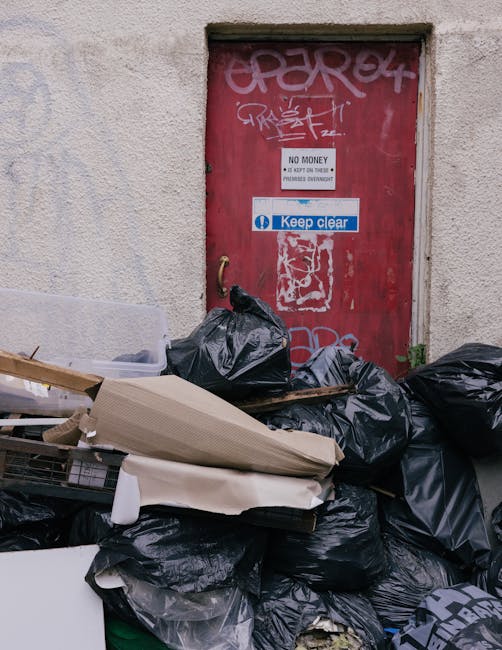
Avoid hidden rubbish removal costs in Seven Sisters N15
If you have ever booked a rubbish collection and then felt your stomach drop when the final bill landed, you are not alone. Hidden rubbish removal costs can creep in fast: access charges, missed-item fees, labour add-ons, and awkward "that wasn't included" moments. In Seven Sisters N15, where homes, flats, shop units, and older properties can all have different access and loading challenges, a clear price matters just as much as the removal itself. This guide explains how to avoid hidden rubbish removal costs in Seven Sisters N15, what to check before you book, and how to compare quotes without getting caught out later.
It is a practical article, not a fluffy one. You will learn how rubbish removal pricing usually works, which questions expose vague pricing, and what to look for if you want a tidy job, fair quote, and no unpleasant surprises. Let's keep it simple. You should know what you are paying for before the team turns up.
Why hidden rubbish removal costs matter in Seven Sisters N15
Rubbish removal sounds straightforward until the price starts changing. A quote that looked reasonable at first can grow if the company charges extra for access, loading time, sorting, mattress disposal, heavy items, or waiting around while you move things. That is where the frustration comes from. Not the price itself, but the lack of clarity.
In Seven Sisters N15, you can run into practical issues that affect pricing more often than people expect. A top-floor flat with narrow stairs. A basement room full of broken furniture. A rear garden that is only accessible through the house. An office clear-out where paperwork, desks, and old electronics all need different handling. Each of those details can affect the time and method required. If you do not discuss them early, the price can drift.
It matters for more than money, too. When costs are hidden, trust disappears. And once a job starts on the wrong footing, it tends to stay awkward. A transparent quote gives you confidence, keeps the work moving, and helps you plan properly. That is especially useful if you are coordinating a move, renovation, probate clearance, landlord turnaround, or business premises clean-out.
Expert summary: The safest way to avoid hidden rubbish removal costs is to get a written, itemised quote based on a clear description, honest access details, and a realistic understanding of what needs removing.
That sounds obvious, but in practice it is where many people slip. Truth be told, a lot of "cheap" quotes are only cheap because they leave out the hard bits.
How rubbish removal pricing usually works
Most rubbish removal services price jobs using a mix of volume, weight, labour, access, and disposal type. Some quotes are based on how much space your rubbish takes in the vehicle. Others are based on item count or a site visit. Often it is a blend of those things. The important part is to understand which one is being used before you agree.
Here is the typical process. You describe what needs to go. The company estimates the size and difficulty. They then quote based on the likely time, waste type, and disposal route. If the description is incomplete, the quote may be only partly accurate. That is where hidden charges sneak in.
Common add-on triggers include:
- extra labour for stairs, long carries, or restricted parking
- heavy or awkward items such as wardrobes, white goods, or broken gym equipment
- mixed waste that needs sorting before loading
- special disposal categories, for example mattresses or electrical items
- same-day or out-of-hours collection requests
- unexpected overflow once the team sees the full pile
If you are comparing rubbish clearance options, it helps to understand the difference between a rough estimate and a fixed price. A rough estimate is useful for planning, but a fixed price offers more certainty, assuming your description is accurate. If your job is more complex, a site visit or photo-based quote can reduce surprises. A straightforward enquiry through pricing and quotes is often the best place to start when you want clarity before anyone arrives.
One small but useful note: if a company is vague about what is excluded, that is not a good sign. Not always a bad sign, but not a good one either.
Key benefits and practical advantages
Getting ahead of hidden costs is not just about protecting your wallet. It improves the whole job from start to finish.
1. Better budget control
When you know the likely cost in advance, you can plan around the removal properly. That matters if you are moving home, fitting out a rented flat, or trying to keep a refurb on budget. No one enjoys adjusting a project because the waste bill ballooned unexpectedly.
2. Less stress on collection day
Clear pricing usually means fewer arguments, less hesitation, and less back-and-forth while the team is waiting at the kerb. The job simply gets done. Nice and calm. Well, as calm as rubbish removal gets.
3. Faster decision-making
If the quote is easy to understand, you can decide quickly whether to go ahead, scale the job, or split it into stages. That is handy for landlords, homeowners, and business owners who are juggling other tasks.
4. Better service match
Transparent pricing often reflects a more organised service overall. It tends to go with clear scheduling, proper insurance, and better handling of waste streams. That matters if you want a reliable clearance rather than a rushed pickup.
5. Less chance of disputes
There is far less room for confusion when everything is agreed in writing before the work begins. A good quote should not feel slippery. It should feel like someone has actually thought the job through.
If you are dealing with household clutter, a full flat, or a tricky loft, the right service should also feel tailored to the job rather than generic. For example, a house clearance or flat clearance often needs more planning than a simple curbside lift. That planning is part of what you are paying for.
Who this is for and when it makes sense
This advice is for anyone who wants predictable rubbish removal costs in Seven Sisters N15. That includes private households, landlords, letting agents, small businesses, tradespeople, and anyone clearing mixed waste after a move or renovation.
It tends to matter most in these situations:
- you have a lot of mixed items and do not know how they will be priced
- access is tight, such as upper floors, narrow hallways, or limited parking
- the waste includes heavy, bulky, or awkward furniture
- you need a same-day or timed collection
- you are clearing a property after tenants, relatives, or a long storage period
- you want a proper disposal route, not a vague "we'll take it away" promise
Some jobs are obvious. A garden pile of branches and old plant pots is one thing. A full garage with broken shelving, paint tins, boxes, and random household bits is another. The second job almost always needs more explanation before the quote is trustworthy.
In practice, the people who benefit most from a careful quote are the ones who are already busy. A shop manager trying to clear stock before opening hours. A family sorting a loft on a Saturday morning. A landlord trying to turn a flat around between tenancies. In those moments, the last thing you want is a price surprise after the truck has already arrived.
Step-by-step guidance
Here is a straightforward way to avoid hidden rubbish removal costs in Seven Sisters N15 without making the process more complicated than it needs to be.
- List everything that needs removing. Be specific. Not just "junk", but boxes, chairs, broken drawers, appliances, bags, rubble, or garden waste.
- Describe access honestly. Mention stairs, lifts, parking limits, narrow entrances, rear access, or long carries from the property to the vehicle.
- Separate special items. Matresses, electrical items, builders waste, and large furniture can affect pricing. Put them in their own list if needed.
- Ask for the pricing method. Find out whether the quote is fixed, estimated, volume-based, or subject to inspection on arrival.
- Request a breakdown. Even a simple itemisation helps: labour, loading, disposal, special handling, and any possible extras.
- Check what is excluded. This is where many hidden costs live. Ask what would trigger a price change.
- Get the agreement in writing. Email, booking confirmation, or written quote. Something concrete. Something you can point to later if needed.
- Confirm the arrival window and process. If the crew needs parking space or building access, sort it in advance.
If the job is more specialised, choose the service that matches the waste type. Builders waste behaves differently from domestic clutter, and office waste has its own handling concerns. A proper builders waste clearance or office clearance is usually easier to price correctly when the waste stream is described accurately from the start.
Here is a simple rule that saves money: the more effort it takes to explain the job, the more important it is to explain the job. Sounds obvious, but it works.
Expert tips for better results
After enough clearances, a few patterns show up again and again. These are the details that help keep pricing fair and predictable.
Be careful with "estimated load" wording
If a quote says the price depends on load size, ask how that is measured. Vehicle volume can be easy to misunderstand. A small pile can look bigger once it is broken down, and bulky items can fill space faster than you think.
Use photos, but do not rely on one angle
Photos are helpful, especially for lofts, garages, and mixed household waste. But one snapshot can miss access problems or hidden items stacked behind other things. A quick set of photos from different angles is much better.
Ask about stairs and carrying distance
This is a classic source of add-on charges. A flat on the third floor with no lift is not the same job as a ground-floor collection, even if the pile looks identical in a photo. Be upfront.
Check the treatment of mixed waste
When waste is mixed, the crew may need extra time sorting different materials. If you know there is a mixture of wood, metal, packaging, and general rubbish, say so. It helps the quote match reality.
Look for clarity on disposal, not just collection
A cheap pickup is not much use if the waste is not handled properly afterwards. Responsible disposal matters, especially for items that may need separate processing or recycling. You want removal and the back-end handled properly, not just a van visit.
For households that want a broader clearance service, home clearance, garage clearance, and loft clearance can be better value than piecemeal removals. Why? Because a full, well-described job often gives a more honest price than several smaller, vague bookings.
Common mistakes to avoid
Most hidden rubbish removal costs are avoidable. The problem is usually not the quote itself. It is the assumptions behind it.
- Vague descriptions. "A few bits" is not enough when the pile contains a sofa, bags, and three broken shelves.
- Ignoring access. No mention of stairs, locked gates, parking issues, or a long walk from the property.
- Forgetting awkward items. Mattresses, fridges, wardrobes, paint, and electricals can all affect cost.
- Assuming all waste is treated the same. Different waste streams can need different handling.
- Choosing only on headline price. The cheapest quote often becomes expensive if extras appear later.
- Not checking terms. If the booking terms are unclear, disputes become more likely.
There is another one, quietly common: people leave sorting until the team arrives. That feels efficient in the moment. It usually is not. The crew stands there waiting, the clock ticks, and the quote starts to wobble.
For commercial jobs, especially when you are clearing stock or moving furniture, consider the whole task rather than the truck collection alone. Services such as business waste removal and furniture disposal can be a better fit when the items are bulky and the handover needs to be organised.
Tools, resources and recommendations
You do not need special software or a complicated system to avoid hidden costs. A few simple tools are enough.
- A room-by-room list. Write down what is being removed before you contact anyone.
- A phone camera. Take wide photos and a few close-ups of awkward items.
- Basic measurements. A sofa, wardrobe, or pile of rubble may be easier to quote once you know approximate size.
- Access notes. Parking restrictions, stair counts, lift availability, and gate codes matter more than people think.
- Questions for the provider. Keep the same list each time so quotes are easier to compare.
If you want a lower-risk booking process, look for a provider that explains pricing clearly, handles waste responsibly, and has obvious policies behind the scenes. Pages like recycling and sustainability, insurance and safety, and health and safety policy give a useful picture of how seriously a company takes the work. Not glamorous reading, maybe, but it tells you a lot.
You may also want to review terms and conditions and payment and security before confirming the job. That is not paranoia. It is just sensible. We have all seen a bargain that turned into a headache.
Law, compliance, standards, or best practice
Rubbish removal is not just about lifting items into a van. Waste has to be handled responsibly, and you should expect a legitimate provider to understand that. In the UK, waste carriers are expected to deal with waste properly, keep control of it, and use suitable disposal routes. You do not need to become a compliance expert, but you should expect professional conduct.
Best practice usually includes:
- clear identification of what is being removed
- proper handling of recyclable and non-recyclable waste
- safe loading practices to protect people and property
- transparent payment terms
- appropriate insurance and operational controls
If a provider cannot explain how they manage waste, that is a warning sign. If they avoid questions about disposal, even more so. A decent company should be comfortable discussing how the work is carried out and what happens to the rubbish afterwards.
This is especially relevant for builders waste, office clearances, and larger domestic jobs. Heavy waste, sharp materials, and mixed loads can all create safety and compliance issues if handled casually. Nobody needs that drama, especially on a rainy Tuesday afternoon when the pavement is already crowded.
Options, methods, or comparison table
When trying to avoid hidden rubbish removal costs in Seven Sisters N15, it helps to compare the common booking methods side by side.
| Method | Best for | Strengths | Risk of hidden costs |
|---|---|---|---|
| Photo-based quote | Mixed domestic waste, furniture, general clearances | Fast, convenient, gives a decent visual estimate | Moderate if access details are missing |
| Site visit | Large, awkward, or complex jobs | Usually the clearest option for pricing accuracy | Low if the scope is agreed clearly |
| Volume estimate over the phone | Smaller, simple collections | Quick and easy to arrange | Higher if the description is vague |
| Fixed item list quote | Furniture, office items, specific loads | Transparent if the list is accurate | Low to moderate depending on extras |
For straightforward jobs, a fixed item list can be enough. For tricky access, multiple floors, or mixed waste, a site visit may save money in the end because it prevents guesswork. The cheapest option on paper is not always the cheapest option in reality. That bit catches people out all the time.
Case study or real-world example
A landlord in Seven Sisters was clearing a one-bedroom flat after a tenancy ended. The first quote looked low because the customer described the job as "a few items of rubbish and some old furniture." On arrival, the team found a wardrobe, two heavy sofas, a broken table, several sacks of mixed waste, and no available parking directly outside. The property was on an upper floor. The initial estimate did not include the extra carry time or the mixed load.
Instead of arguing, the job was reworked with a clearer scope. The landlord sent better photos, confirmed stair access, listed every item, and gave parking details in advance. The next quote was higher than the first one, but it was honest. More importantly, it stayed the same. No surprises, no awkward pause while someone recalculated at the door.
The lesson is simple. A clear quote is not always the lowest quote. But it is often the one that costs less in the end because it avoids add-ons, delays, and frustration. For larger domestic clear-outs, a planned house clearance or furniture clearance can give you that cleaner, more predictable result.
Practical checklist
Use this checklist before you book rubbish removal in Seven Sisters N15.
- Have I listed every item or waste type that needs removing?
- Have I explained access clearly, including stairs, lifts, parking, and gate restrictions?
- Have I included heavy, bulky, or awkward items?
- Have I asked whether the quote is fixed or estimated?
- Have I checked what could trigger an extra charge?
- Have I requested the price in writing?
- Have I confirmed when the team will arrive and how long the job may take?
- Have I checked payment terms and any deposit requirements?
- Have I asked about recycling, disposal, and responsible handling?
- Have I compared the quote against at least one other option?
If you can tick most of those boxes, you are in a much better position. Simple as that.
Conclusion
Avoiding hidden rubbish removal costs in Seven Sisters N15 is mainly about clarity. Clear list. Clear access details. Clear quote. Clear terms. Once those pieces are in place, the whole process becomes easier, fairer, and far less stressful.
Whether you are clearing a flat, a loft, a garage, an office, or a pile of builders waste, the same rule applies: the more honest the brief, the more accurate the price. And if a provider is transparent from the start, you are far more likely to get a smooth, professional service without the annoying little surprises that ruin the day.
Take your time, ask the direct questions, and trust the companies that answer plainly. That one habit can save you money, but it also saves you hassle. Which, frankly, is the better win on most days.
Get a free quote today and see how much you can save.
Frequently Asked Questions
What are hidden rubbish removal costs?
They are extra charges that appear after the initial quote, often because of access issues, heavier waste, special items, extra labour, or incomplete descriptions of the job.
How do I avoid surprise charges when booking rubbish removal?
Give a full list of items, explain access clearly, ask what is excluded, and request a written quote. If anything feels vague, ask again before booking.
Is a fixed-price rubbish removal quote always better?
Not always, but it usually offers more certainty. A fixed quote is helpful when the scope is clear. For complex jobs, a site visit may be the safest way to get accurate pricing.
Do stairs or long carries really affect the price?
Yes, they often do. Extra carrying time, narrow access, and difficult parking can all increase labour and affect the final cost.
Why do quotes change once the team arrives?
Usually because the job was not described accurately enough, or because hidden access problems and additional waste only became visible on site.
Should I send photos before getting a quote?
Yes. Photos help, especially if you include several angles and show the access route. They are one of the easiest ways to reduce pricing confusion.
Are bulky items like sofas and wardrobes more expensive to remove?
They can be. Bulky furniture takes more loading space and may require extra labour, especially if the access is tight or the item is awkward to carry.
What should be included in a good rubbish removal quote?
A clear description of what is being removed, how the price is calculated, any exclusions, and details about labour, access, disposal, and payment terms.
Can mixed waste cost more than a single waste type?
Yes. Mixed loads can take longer to sort and may involve different handling or disposal routes, which can affect the price.
How do I compare rubbish removal companies fairly?
Compare the scope, not just the headline price. Look at what is included, how clearly the job is described, whether the quote is fixed, and how the company handles disposal.
Is it worth paying more for a clearer quote?
Often, yes. A slightly higher but transparent quote can be cheaper in practice if it prevents add-ons, delays, or dispute later on.
What if I am not sure how much rubbish I have?
Take photos, make a rough list, and ask for a visit or a more detailed quote. That is much safer than guessing and hoping the price stays the same.